

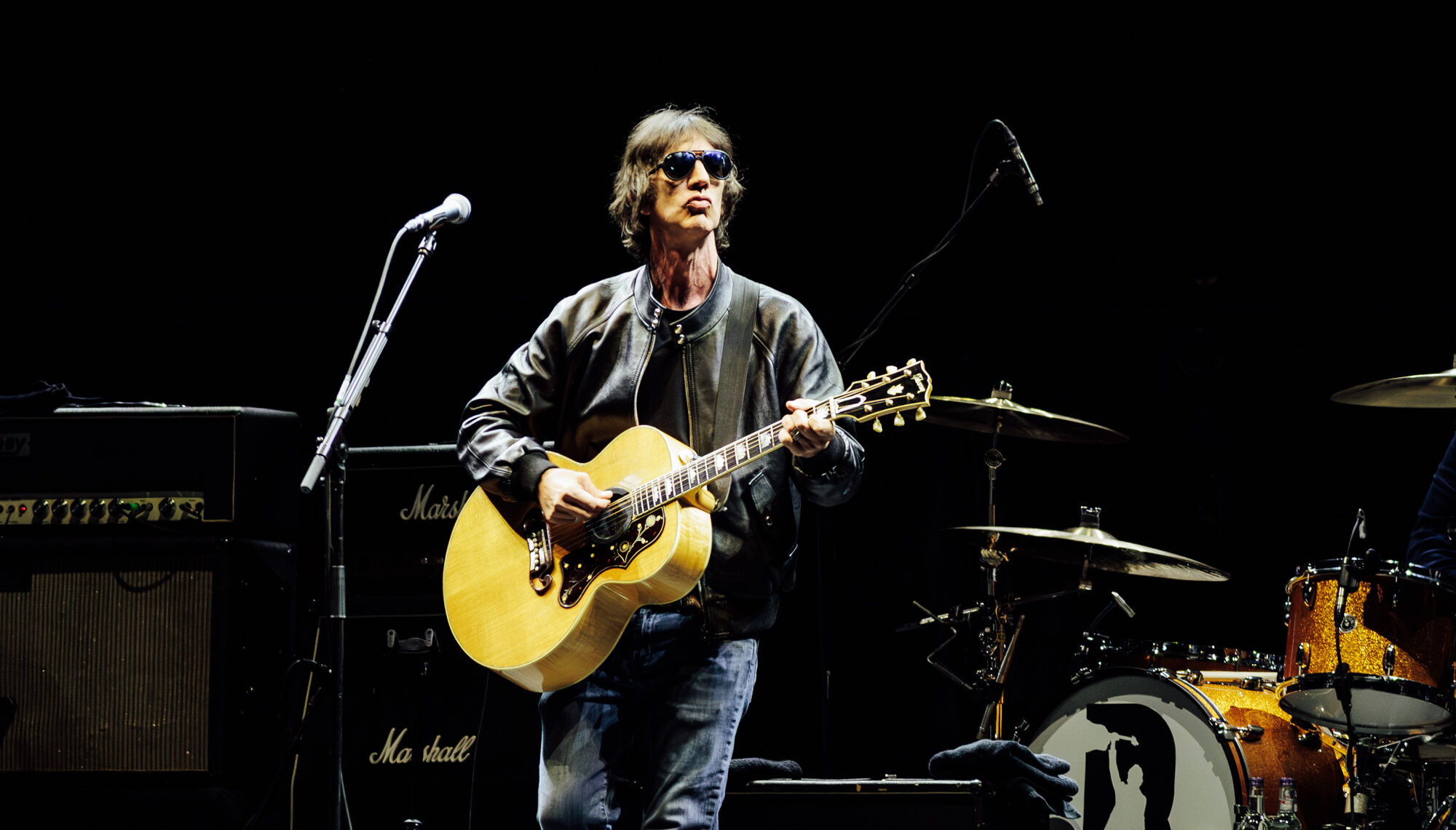

It’s hard to argue with anyone who says that Richard Ashcroft has never been A Bigger Deal than he is right now.
Sure, he headlined Glastonbury as the frontman (and primary songwriter) of Britpop bastions, The Verve. And yes, his song Bitter Sweet Symphony sixth form common rooms to last orders for the best part of three decades.
But it’s now, in 2026, that Richard Ashcroft is finally getting his flowers.
.
And at his landmark headline show at London’s The O2, that feeling is palpable.
He walks out to a hero’s welcome, but doesn’t play it like one. There are no big theatrics, and no overworked staging. Instead, there’s a larger-than-life illumination of Ashcroft’s initials, some gently strummed chords, and an abundance of the kind of charisma that’s only worn this comfortably by those who know that they’ve earned it.
And on the basis of tonight’s show, few people have earned it more than Richard Ashcroft. Over the next ninety minutes, the Nineties stalwart delivers a razor-sharp set of indie classics, modern-day fan favourites, and the occasional era-defining anthem.
.
Naturally, the fans eat it up.
Lucky Man, Sonnet, and The Drugs Don’t Work are duly wheeled out, with the fans taking the lead in the vocals department for the majority of the aforementioned bangers.
Ashcroft lets it happen, stepping back when he needs to, then leaning in just enough to pull everything back together. His voice isn’t flawless, but that’s never been the point. It still cuts through, and still carries the weight of everything that made those records hit us in the heart in the first place.
The non-Verve songs pack a punch, too; Break The Night With Colour sounds particularly visceral, while A Song For The Lovers is precisely the kind of timeless composition that would’ve slotted in nicely on, perhaps, Ashcroft’s most lauded collection, The Verve’s Urban Hymns.
.
And finally, of course, we have Bitter Sweet Symphony.
It’s exactly what you think it’ll be, and somehow still more. It’s not just a big moment, but a shared one – a communal core memory, and the kind that reminds you why songs like that don’t really belong to the person who wrote them anymore.
For a long time, Richard Ashcroft felt like an artist people respected more than they celebrated. Nights like this suggest that the gap’s finally closing.
